
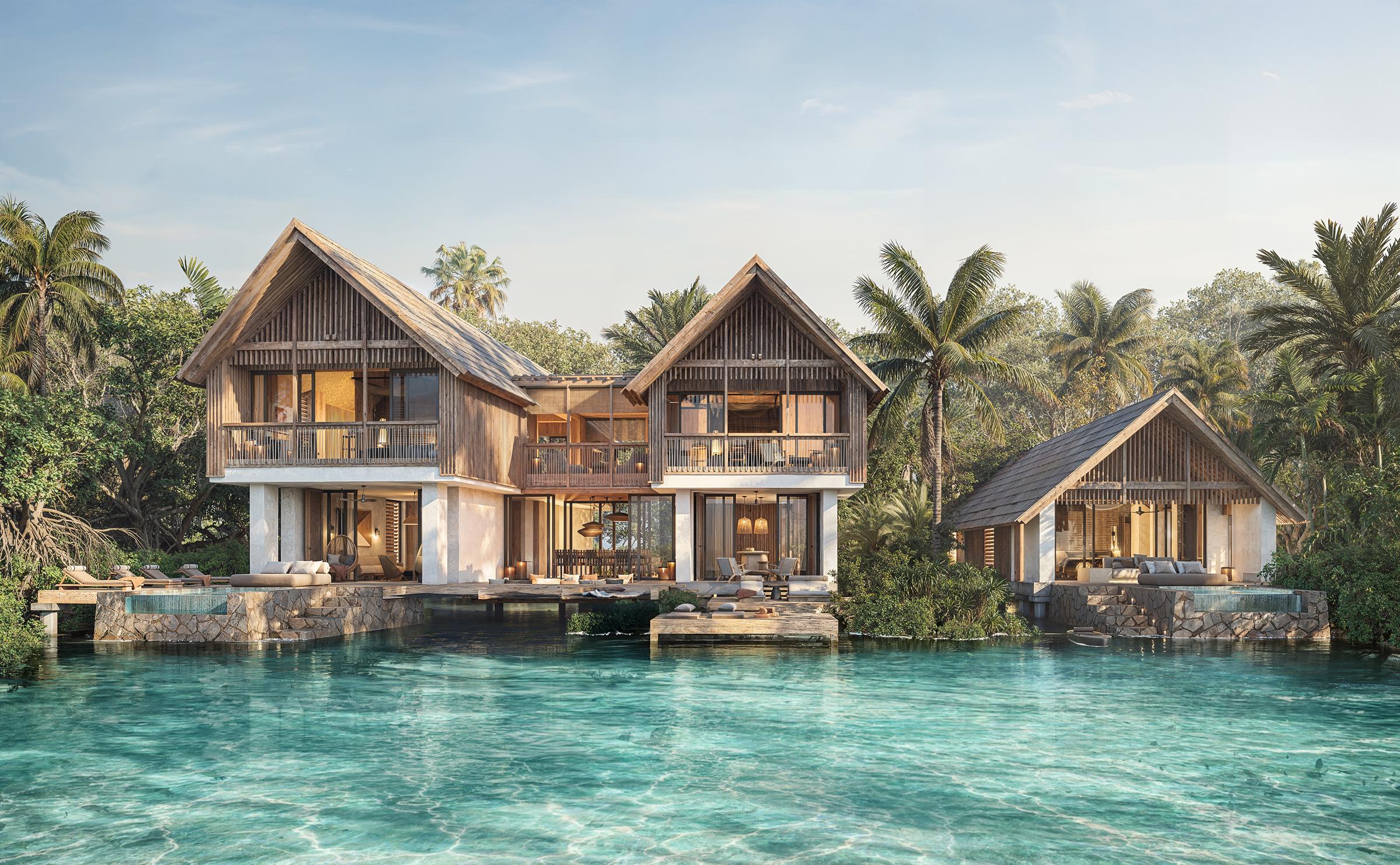
Owning an overwater villa has traditionally meant looking toward the Maldives, Bora Bora or other far-flung tropical destinations. A new luxury residential project in Belize is trying to bring that experience much closer to North America—and this time, the villas aren’t simply hotel rooms you can book for a week. They’re homes you can buy.
Six Senses Residences Belize is taking shape on Emerald Caye, a private island near Ambergris Caye and San Pedro, surrounded by some of the extraordinarily clear waters that have made Belize one of the Caribbean’s most recognizable diving destinations.
The development is limited to just 16 private residences, with current pricing beginning at US$3.75 million. The developer says the homes start at approximately 2,500 square feet, while its latest marketing describes larger three- and five-bedroom oceanfront villas offering roughly 4,400 to 7,600 square feet of indoor and outdoor living space depending on configuration. Six Senses Residences Belize
And this isn’t simply another collection of expensive beachfront houses.
The idea behind Emerald Caye is to combine private-island ownership with the services and amenities of Six Senses, one of the world’s better-known luxury wellness and hospitality brands.
That comparison isn’t accidental.
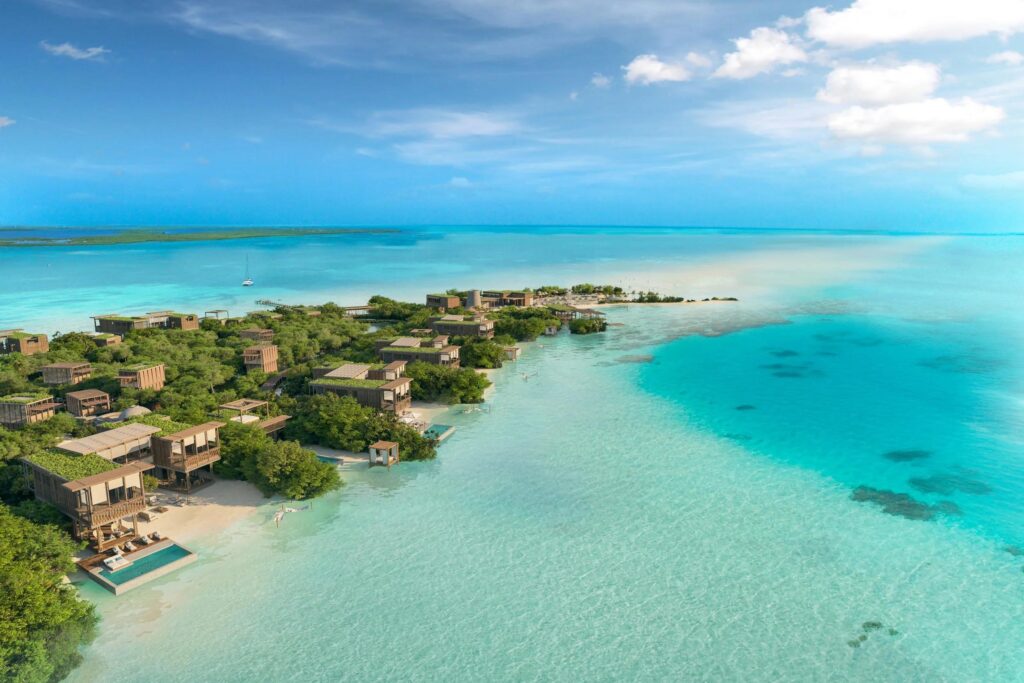
Earlier marketing for the project described a collection of overwater residences alongside a resort featuring approximately 40 overwater bungalow suites, and Forbes reported when sales launched in March 2026 that the development was bringing a Maldives-style overwater residential concept to the Caribbean. Forbes
The project’s current residential website has shifted some of its terminology toward oceanfront and beachfront villas, but the central concept remains the same: homes positioned immediately against the turquoise water, surrounded by an island environment rather than a conventional resort development.
That distinction may actually make the project more interesting from a real-estate perspective.
Rather than purchasing a condominium inside a large hotel tower, buyers are being offered one of only 16 villas spread across a private island.
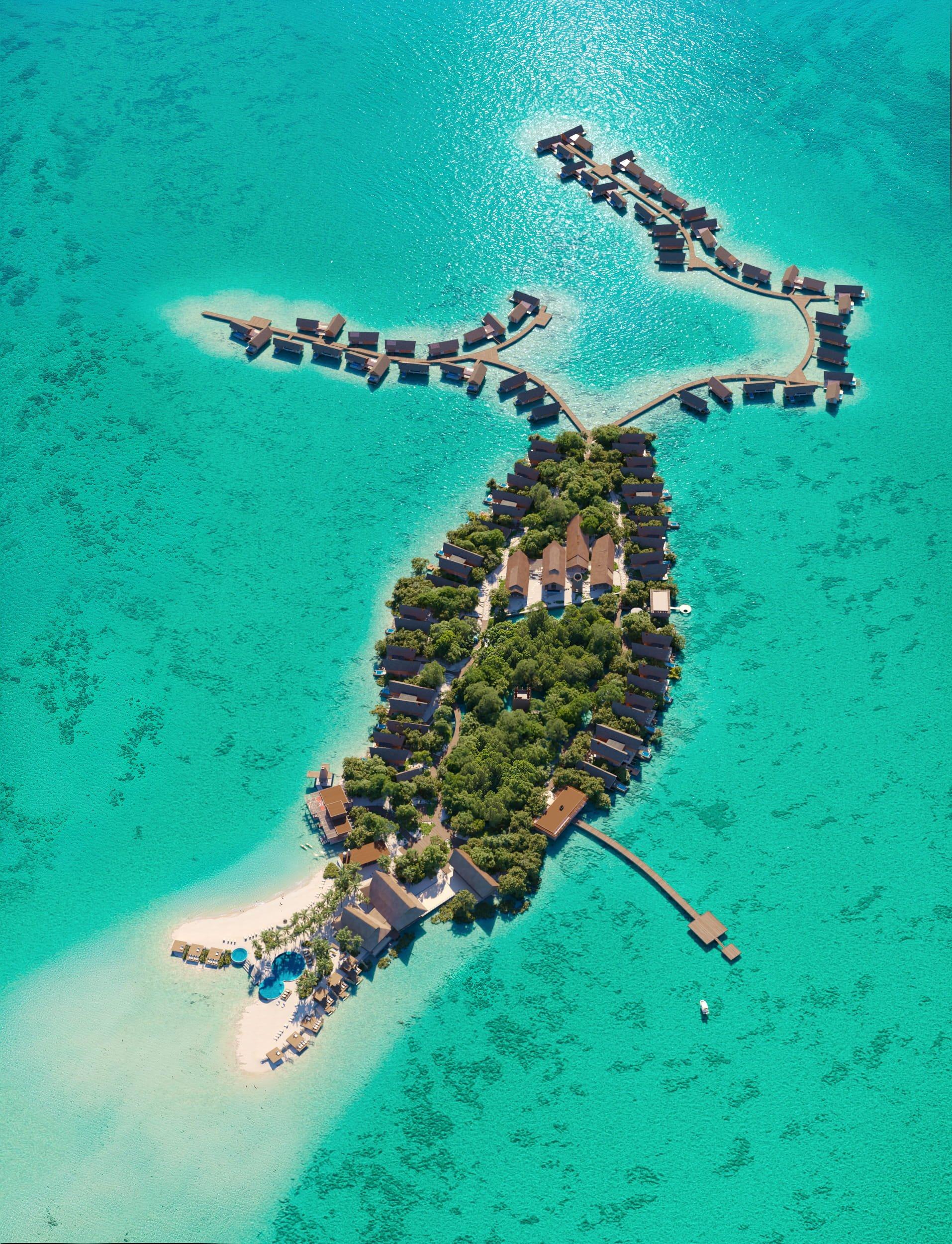
Emerald Caye lies off Ambergris Caye, the island that’s home to San Pedro and serves as Belize’s primary Caribbean tourism hub.
The setting is a major part of the property’s selling proposition.
Six Senses says the development sits within the Hol Chan Marine Reserve area, surrounded by mangroves, beaches and the marine environment associated with the Belize Barrier Reef. Its official residences page describes the location as part of a 4,448-acre protected marine reserve.
Belize occupies an interesting geographic position for luxury real estate. Technically part of Central America, it combines mainland jungle, Maya archaeological sites and rivers with islands and Caribbean coastline.
And for North American buyers, getting there is considerably easier than reaching many of the islands traditionally associated with ultra-exclusive overwater villas.
San Pedro provides the gateway to Ambergris Caye, while residents can continue to Emerald Caye by boat.
The developer’s current site says owners will have access to complimentary luxury boat shuttles to San Pedro and Secret Beach, as well as a private pier and helipad.
At this level, buyers aren’t simply paying for square footage.
They’re buying scarcity.
There are only sixteen residences planned on Emerald Caye, according to the developer. The current starting price is US$3.75 million, with final pricing depending on villa size, orientation and location.
Architecturally, the residences emphasize large indoor-outdoor spaces, extensive views and natural materials rather than the polished marble-and-glass aesthetic commonly associated with Caribbean luxury condominiums.
Studio Caban designed the residences around the tropical climate, with Six Senses describing them as structures integrated into the existing vegetation to help preserve privacy and connect owners more directly with the landscape.
It’s luxury, but intentionally barefoot luxury.
The rise of branded residences is changing luxury real estate throughout the Caribbean.
Instead of simply owning a vacation home, buyers increasingly want something closer to a permanently serviced resort experience.
Emerald Caye fits directly into that trend.
Current plans give residents access to two signature restaurants, a Six Senses Spa, a 1.5-mile sandbar, The Nest social lounge, a yoga pavilion, kids club and fitness center.
The wider project also includes Secret Beach, where Six Senses has described additional dining, recreation and watersports infrastructure.
This changes the ownership proposition considerably.
A traditional Caribbean villa may require an owner to coordinate security, landscaping, housekeeping, maintenance, transportation and property management independently.
A branded residence attempts to wrap much of that experience into one managed ecosystem.
Six Senses is part of the broader IHG luxury hospitality portfolio, although there’s an important distinction potential buyers should understand.
The Emerald Caye developer’s legal disclaimer states that the residences themselves are not owned, developed or sold by IHG Hotels & Resorts, Six Senses or their affiliates. They are developed by CRDG LLC and operate using the Six Senses residential branding and hospitality relationship.
That type of structure is common within branded real estate.
Still, the Six Senses name matters.
The brand has become closely associated with wellness-oriented luxury resorts, nature-focused architecture and high-end experiential travel. Its global residential portfolio now includes or plans projects in destinations ranging from Belize and Mexico to Dubai, Greece, Portugal and the United States.
For Belize, attracting a brand at this level also adds another internationally recognizable name to a luxury tourism market historically dominated by smaller resorts and independently operated villas.
There’s another component likely to attract second-home buyers.
Six Senses says owners have the opportunity to place their residences into a hotel-operated rental program, and some configurations have been designed with lock-off spaces that can allow a portion of a property to be rented separately.
That’s potentially significant.
A US$3.75-million island home that remains empty for much of the year represents a very different proposition from a residence that can participate in the resort’s rental inventory.
But buyers shouldn’t automatically translate the presence of a rental program into a guaranteed investment return.
Management fees, owner-use restrictions, operating expenses, rental splits, taxes, maintenance, insurance and occupancy can all materially change the economics.
Those details deserve as much attention as the infinity pool.
For decades, the Caribbean’s ultra-luxury property market has been dominated by familiar names: the Bahamas, Cayman Islands, Turks and Caicos, St. Barts, Barbados and increasingly the Dominican Republic.
Belize has generally occupied a slightly different niche.
Ambergris Caye built a strong market around diving, smaller resorts, villas and vacation rentals rather than enormous five-star resort complexes.
Projects like Six Senses Residences Belize suggest the country may now be moving further into the ultra-luxury branded residence market.
And the timing is interesting.
Luxury hotel brands are increasingly attaching residential components to resort developments throughout the Caribbean and Mexico. Knight Frank’s 2026 branded residence research similarly points to continued expansion of the model beyond major cities and into coastal and resort markets.
For developers, residences can help finance major hospitality projects.
For buyers, they provide access to a level of service normally associated with hotels.
For hotel brands, they create another way to maintain long-term relationships with wealthy clients.
Six Senses Belize sits directly at the intersection of all three trends.
A property this unusual shouldn’t be evaluated like a normal condominium.
Prospective purchasers should have an independent Belizean attorney establish exactly what property interest is being acquired, how any structures extending toward or over the water are legally treated, and what rights apply to the surrounding marine area.
Buyers should also understand the residential management agreement, Six Senses branding arrangement, insurance requirements, hurricane exposure, maintenance responsibilities, rental-program terms, resale restrictions and annual operating costs before signing a contract.
Pre-construction adds another layer.
The project remains a development rather than an established operating resort, with the developer indicating completion is planned for 2028.
That’s not unusual in branded Caribbean real estate, but renderings should never substitute for contractual due diligence.
That’s what makes Emerald Caye more interesting than its sixteen villas alone.
Caribbean luxury real estate has already moved from simple beachfront homes toward hotel-managed residences, resort condominiums, private clubs and branded communities.
Overwater ownership may be the next extension of that idea.
Hotels have proven for decades that travelers will pay extraordinary nightly rates to sleep directly above tropical water.
Turning that experience into something a buyer can actually own changes the equation.
If the concept proves successful in Belize, it wouldn’t be surprising to see other Caribbean developers explore similar low-density overwater residential projects where environmental regulations and local planning rules allow them.
For now, however, the supply is extremely limited.
Sixteen residences.
One private island.
And an entry price of US$3.75 million.
For anyone who has ever looked at an overwater bungalow in the Maldives and thought I wish I could own that, the Caribbean is suddenly offering an answer much closer to home.