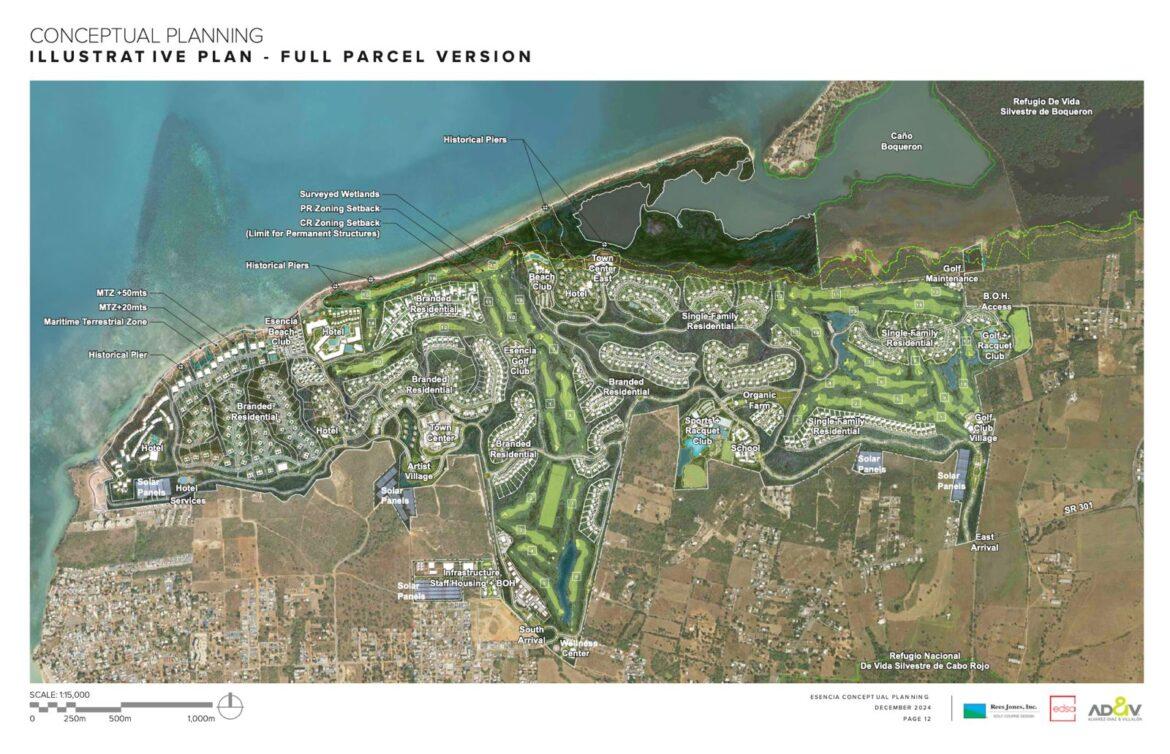
Puerto Rico has given the green light to Esencia, a proposed US$2 billion luxury coastal development in Cabo Rojo that could reshape a large stretch of the island’s southwest coast. The project is being promoted as a master-planned community with upscale homes, hotels, golf courses, green space, a private school, an equestrian center and renewable-energy features. Supporters see it as a major economic opportunity for the region, while environmental advocates warn that the plan raises serious questions about water, coastal habitats and long-term sustainability.
Puerto Rico’s approval of the Esencia project marks one of the island’s most ambitious luxury development decisions in recent years. Planned for Cabo Rojo, a municipality known for its beaches, salt flats, wildlife refuges and dramatic coastal landscapes, the project carries an estimated price tag of US$2 billion. Its backers describe it as a high-end, carefully designed community that could bring investment, jobs and global attention to the island’s southwest.
The development is expected to be built as a master-planned coastal destination rather than a single hotel or residential complex. That means the project would combine housing, hospitality, recreation, education and open space into one large integrated plan. For Puerto Rico, which continues to balance tourism growth with infrastructure limitations and environmental pressures, the approval is significant.
Cabo Rojo has long been cherished by Puerto Ricans for its quieter pace compared with San Juan and other heavily developed tourist zones. The southwest coast is often associated with natural beauty, local seafood, birdwatching, beaches and family tourism. Because of that, any large luxury project in the area is bound to attract attention—not only for its economic potential, but also for what it could mean for the identity and ecology of the region.
The government’s backing suggests confidence that Esencia can move forward within Puerto Rico’s planning and permitting framework. Still, approval does not end the debate. Environmental organizations and community advocates continue to question whether a development of this size can truly coexist with sensitive coastal ecosystems, limited water resources and the realities of climate change.
Developers have presented Esencia as more than a luxury resort. The vision is a complete community with residences, hotels, recreational amenities and services designed to appeal to affluent buyers, visitors and families. The project’s location in Cabo Rojo gives it a strong selling point: access to one of Puerto Rico’s most scenic coastal regions, away from the more congested tourism corridors of the northeast.
A central part of the project’s promise is economic development. Large construction projects can generate jobs during the building phase, while hotels, maintenance, landscaping, security, hospitality and retail operations may provide longer-term employment. Supporters argue that the southwest has not received the same level of tourism investment as other parts of Puerto Rico and that Esencia could help diversify the island’s visitor economy.
Developers have also emphasized sustainability, including renewable energy and extensive green space. In modern luxury real estate, environmental branding is increasingly important, especially in coastal destinations where buyers and guests expect natural beauty to be preserved. Esencia’s backers appear to be positioning the project as a model for upscale development that integrates landscaping, conservation-minded design and cleaner energy systems.
However, promises of sustainability will likely be judged by implementation rather than promotional language. Puerto Rico has seen intense debates over land use, coastal access, energy resilience and public infrastructure. For many residents, the key question is whether Esencia will meaningfully benefit local communities or primarily serve wealthy outsiders seeking exclusive properties in a prized coastal setting.
The planned components of Esencia include luxury residences, hotels, golf courses, an equestrian center, a private school and large areas of green space. Taken together, these features suggest a development aimed at high-net-worth residents, second-home buyers, vacationers and families looking for a private, amenity-rich environment. It is not simply a tourism project; it is a lifestyle community.
Luxury homes are likely to be one of the project’s main economic engines. Coastal real estate in Puerto Rico has drawn increasing interest from investors and mainland U.S. buyers, particularly in areas offering tax incentives, tropical scenery and access to the U.S. market. In Cabo Rojo, this could raise property values, but it could also intensify concerns about affordability and displacement if surrounding communities experience price pressure.
Hotels would expand the region’s capacity to host visitors and could help establish Cabo Rojo as a more prominent luxury destination. While the area already attracts tourists, its hospitality infrastructure is smaller than that of San Juan, Dorado or Rincón. A major resort component could bring new restaurants, services and international marketing, but it may also increase traffic, water demand and pressure on beaches and roads.
Golf courses and equestrian facilities add to the upscale character of the plan, but they are also among the features most likely to draw environmental scrutiny. Golf courses can require significant land, irrigation and chemical management if not designed carefully. The inclusion of green space may help soften the project’s footprint, yet critics will want to know how much land is truly conserved, how it will be managed and whether public access is preserved.
Environmental concerns remain at the center of the controversy surrounding Esencia. Cabo Rojo is ecologically important, with nearby coastal habitats, wetlands, salt flats and areas that support birds and marine life. Environmental groups worry that a project of this scale could alter drainage patterns, disturb habitats, increase runoff and place additional stress on fragile ecosystems.
Water is one of the most pressing issues. Puerto Rico has faced recurring challenges involving drought, aging infrastructure and uneven water distribution. A luxury development with hotels, residences, golf courses and landscaping could require substantial water resources. Even if developers use conservation systems, recycled water or efficient irrigation, critics are likely to demand clear evidence that the project will not strain local supplies.
Coastal resilience is another major concern. Puerto Rico is vulnerable to hurricanes, storm surge, erosion and sea-level rise. Building near the coast requires careful planning, especially as climate risks become more severe. A project marketed around coastal beauty must also confront the long-term reality that shorelines are changing and that development can sometimes reduce natural buffers such as dunes, wetlands and vegetation.
The debate over Esencia ultimately reflects a broader question facing Puerto Rico: how should the island pursue economic growth without sacrificing the natural resources that make it unique? Supporters see the project as a transformative investment in the southwest. Opponents fear it could become another example of luxury development moving faster than environmental safeguards. The answer will depend on transparency, enforcement, community engagement and whether sustainability claims are matched by measurable protections.
The approval of the US$2 billion Esencia project in Cabo Rojo is a defining moment for Puerto Rico’s southwest coast. It offers the promise of investment, jobs, luxury tourism and new amenities, but it also brings serious concerns about water, ecosystems, public access and climate resilience. As the project moves forward, its success will not be measured only by the homes, hotels or golf courses it builds, but by whether it can respect Cabo Rojo’s environment and deliver lasting benefits to the people of Puerto Rico.